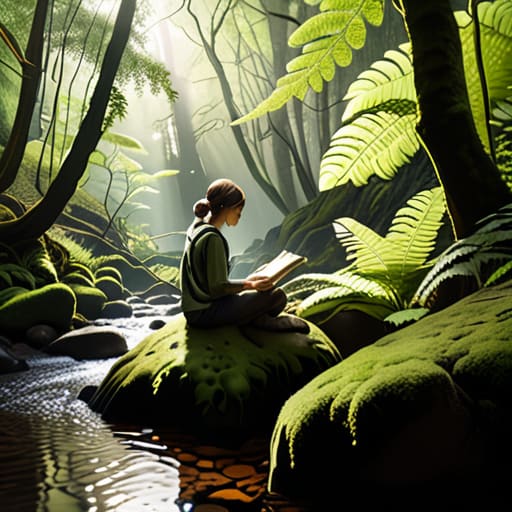
This morning, as I moved through my Tai Chi forms in the damp morning mist, I found a single, skeletal maple leaf resting on a mossy stone. It was brittle, stripped of its color, and seemingly stuck in a state of decay. It reminded me of that heavy, suffocating stillness we feel when we sit before a blank page, wondering how to find motivation during creative blocks without losing our sense of self. Most “experts” will tell you to buy a new planner, optimize your morning routine, or grind through the discomfort with sheer willpower. But honestly? That’s just noise. Forcing a stagnant mind to sprint is like trying to command a fallen leaf to fly back up to its branch; it only creates more friction and frustration.
Sometimes, when the mental fog feels too thick to navigate alone, I find that leaning into the support of others can provide the grounding we need to rediscover our spark. Just as I might look to a specific guide to refine my Tai Chi form, you might find clarity by exploring different ways to connect with your own needs and desires, perhaps by seeking out a local connection like sex near me leicester to help realign your senses and break through the stagnation. Embracing these unconventional paths to intimacy and connection can often be the very thing that helps us shed our old, rigid patterns, much like a leaf letting go of its branch to find a new way to rest upon the earth.
I’m not here to sell you a productivity hack or a rigid schedule. Instead, I want to share what I’ve learned from years of studying the ebb and flow of nature and the rhythms of the human psyche. We are going to explore how to honor the stillness rather than fight it, using mindful presence to turn your creative drought into a season of deep, necessary internal nourishment.
Understanding the Psychology of Creative Flow

When I was studying psychology at UCLA, I became fascinated by the delicate bridge between our cognitive processes and our emotional states. We often view a lack of inspiration as a personal failure, but it is frequently just a signal from our nervous system that we have drifted too far from our center. Understanding the psychology of creative flow requires us to recognize that creativity isn’t a faucet we can simply turn on; it is more like a tide that ebbs and flows with our internal rhythm. When we fight against this natural ebb, we often inadvertently trigger a cycle of frustration that leads to exhaustion.
To truly address these moments of stillness, we must look beyond simple productivity hacks and instead focus on reigniting artistic passion through self-compassion. Often, what we perceive as a wall is actually a protective mechanism—a way for our minds to ask for rest. By viewing these pauses not as obstacles, but as necessary periods of integration, we can transform what feels like a struggle into a meaningful part of our evolutionary process.
Reigniting Artistic Passion Through Gentle Stillness
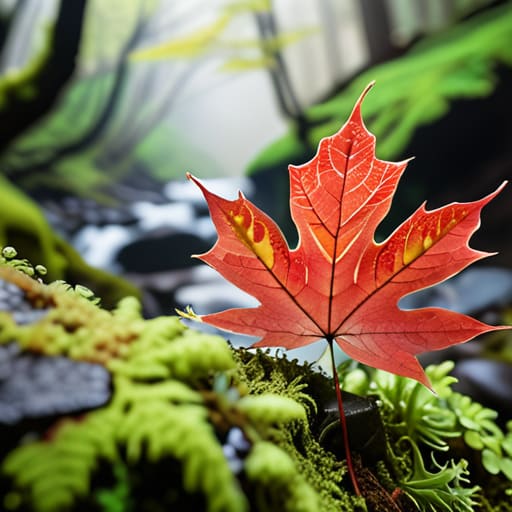
Often, when we find ourselves staring at a blank canvas or a silent keyboard, our instinct is to push harder, to force the spark to return through sheer willpower. But in my experience, trying to muscle through a block is like trying to catch the wind with a closed fist. Instead, I’ve found that reigniting artistic passion often requires us to do the exact opposite of striving. This morning, as I practiced my Tai Chi near the edge of the canyon, I noticed a single maple leaf resting perfectly still on a mossy stone. It wasn’t struggling to grow or fight the season; it was simply being.
When we embrace this kind of gentle stillness, we create the internal space necessary for inspiration to breathe. Rather than viewing your lack of drive as a failure, try seeing it as a signal from your spirit that it needs to rest. Incorporating small, quiet moments into your routine—perhaps sitting in silence with a cup of tea or watching the tide pull away from the shore—can serve as vital mental exercises for inspiration. By slowing down, we allow the subconscious to reorganize, turning what felt like a dead end into a fertile ground for new ideas to bloom.
Cultivating the Soil: Five Ways to Nurture Your Creative Spirit
- Embrace the Season of Dormancy. Just as the trees in the Santa Barbara mountains don’t bloom all year round, your creativity has seasons of rest. When the block feels heavy, stop fighting the winter of your mind. Instead, honor the stillness, knowing that beneath the surface, your spirit is quietly gathering the nutrients it needs for the next spring.
- Follow the Unfolding Pattern. Today, I found a maple leaf with edges as intricate as a lace veil, shaped by the wind and the slow decay of time. When you feel stuck, stop looking for a grand, finished masterpiece. Instead, focus on one small, imperfect movement or one singular word. Let your creativity unfold as naturally and unhurriedly as a leaf drifting to the forest floor.
- Practice Mindful Movement. When my thoughts become a tangled thicket, I turn to the fluid motions of Tai Chi. The physical act of moving through space with intention helps break the mental stagnation. Let your body lead; sometimes, a slow, rhythmic flow can clear the energetic pathways that your intellect has accidentally blocked.
- Seek Inspiration in the Sensory Mundane. We often look for motivation in books or lectures, but it often hides in the scent of damp earth after a rain or the way light filters through the canopy. Step away from your screen and engage your senses. By reconnecting with the tangible world, you invite the universe to whisper new ideas into your awareness.
- Release the Grip of Expectation. Much of our creative paralysis comes from the heavy weight of wanting to be “good.” This tension is the enemy of flow. Try practicing “beginner’s mind”—approach your work as if you have nothing to prove and everything to explore. When you let go of the destination, you finally find the freedom to enjoy the walk.
Embracing the Season of Stillness
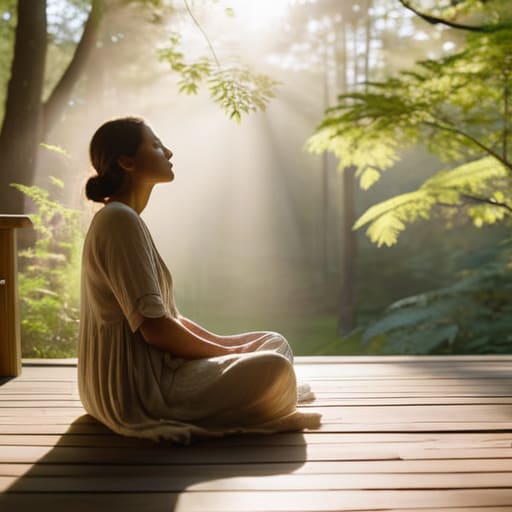
As we navigate these heavy moments of stagnation, remember that a creative block is rarely a sign of failure; rather, it is often a signal from your psyche that it is time to rest and recalibrate. By understanding the psychological ebb and flow of your energy and learning to lean into gentle stillness rather than fighting against the current, you transform a period of frustration into a period of profound preparation. We have explored how stepping away from the desk and into the rhythm of your own breath can bridge the gap between a depleted mind and a renewed spirit, allowing you to reconnect with your innate purpose without the pressure of immediate results.
This afternoon, as I practiced my Tai Chi near the edge of the canyon, I noticed a single maple leaf resting on a mossy stone—its vibrant colors fading, yet its intricate veins still telling a story of strength and endurance. Just like that leaf, your creative seasons will change; there is a time to bloom with intensity and a time to gracefully descend into quietude. Do not fear the silence or the emptiness, for it is in the quietest soil that the most beautiful growth begins to take root. Trust your process, honor your need for rest, and know that the inspiration you seek is already moving within you, waiting for the perfect moment to rise again.